
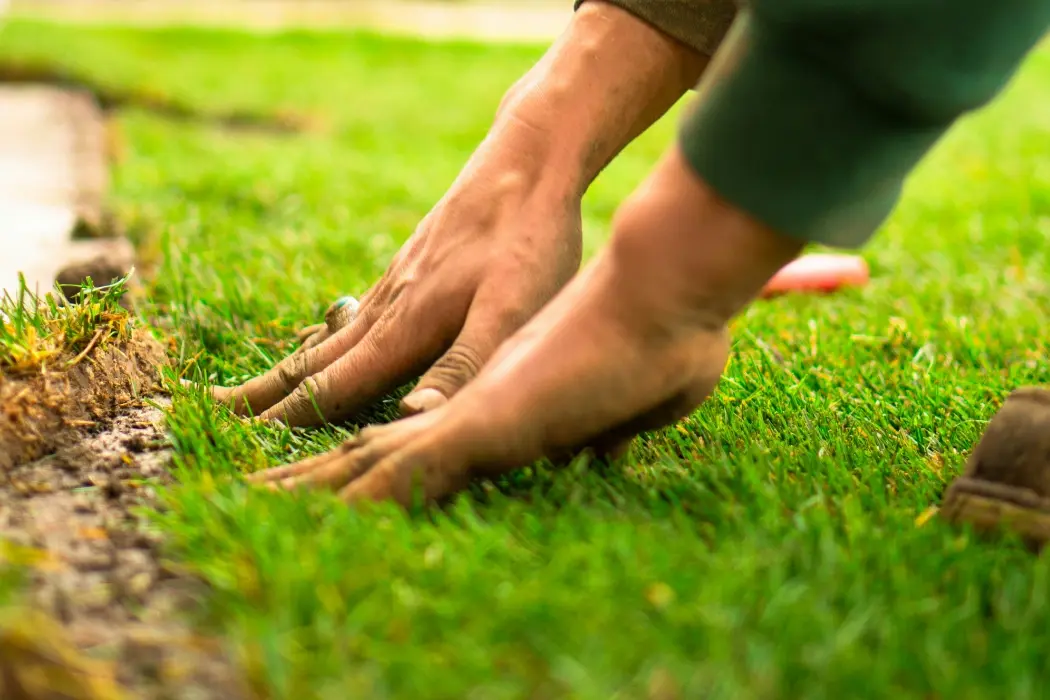
If there’s one thing that determines whether your new lawn thrives or struggles, it’s not the turf itself — it’s what’s underneath it.
Soil preparation is the part most people rush, underestimate, or try to cut corners on. And unfortunately, it’s also the part that causes the majority of problems down the track. Uneven growth, poor drainage, dry patches, soft spots — these issues almost always come back to what was done before the turf was even laid. The reality is simple. You can buy the best turf available, but if the ground isn’t prepared properly, it won’t perform the way it should. It all starts with a clean base. Before anything else, the area needs to be cleared properly. This means removing old grass, weeds, rocks, and any debris sitting on the surface. Leaving behind existing vegetation is one of the quickest ways to create problems later.
Once the area is cleared, the next step is to loosen the existing soil. In many parts of South East Queensland, especially around newer builds, the ground can be heavily compacted from construction work. Compacted soil doesn’t allow water to drain properly and makes it difficult for new turf roots to establish themselves. Breaking up the soil to a depth of around 100 to 150 millimetres helps create a workable base. It allows air, water, and nutrients to move through the soil more freely, which is exactly what your turf needs during those early stages of growth. Adding a quality turf underlay is where the difference between an average lawn and a great one really starts to show. A good underlay provides structure, improves drainage, and gives the turf a nutrient-rich base to establish into.
Levelling is another critical step. If the ground isn’t level before the turf goes down, those imperfections will show immediately. High spots dry out faster, low spots can hold water, and uneven areas can make mowing difficult. Watering the soil before laying turf is often overlooked. Dry soil can pull moisture out of freshly laid turf very quickly. What you’re aiming for is a lightly damp base — not soaked, not dry, but somewhere in between. Preparation and delivery need to line up. Turf should be laid within eight hours of delivery. That means all preparation needs to be finished beforehand so the turf can be installed immediately and watered straight away. When preparation is done properly, the turf establishes faster, roots grow deeper, and the lawn becomes more resilient over time.
Preparing your soil might not be the most exciting part of installing a new lawn, but it’s easily the most important. It’s the foundation that everything else depends on.